emUSB-Host
The USB host stack for embedded systems
- Supports all USB transfer types and speeds (control, bulk, interrupt, isochronous)
- Manages multiple devices and hubs with full hot-plug support
- Reliable and modular architecture with internal pipe management and error recovery
- 1.Key features
- 1.1.Reliability
- 1.2.Plug-and-play setup
- 1.3.Versatility
- 2.Use cases
- 3.Components
- 3.1.Communication
- 3.2.Multimedia
- 3.3.Peripheral
- 3.4.Smart card
- 3.5.Storage
- 3.6.UART converter
- 3.7.Vendor
- 4.Drivers and supported controllers
- 5.emPower-USB-Host+
- 6.Performance
- 7.Licensing
- 8.FAQ
- 9.Latest news
Key features

Reliability
emUSB-Host implements internal USB pipe-management and extended error-recovery mechanisms. These ensure reliable and consistent operation.
Furthermore, sophisticated test procedures ensure quality and dependability for any situation.

Plug-and-play setup
Setting up emUSB-Host is as easy as plug-and-play. New devices are automatically detected and enumerated, and respective target applications notified of their presence.
Device removal is just as simple, and emUSB-Host even ensures that all transfers are cancelled, before “cleaning up” afterwards. Integration is hassle free, as enumeration is handled in the application.

Versatility
emUSB-Host supports a wide range of USB classes and devices — even proprietary third-party classes. For proprietary USB vendor-class-specific implementations, the dedicated “USB vendor class component” can assist.
Connecting multi-interfaces devices is trouble free, as each interface has a dedicated class handler.
Use cases
Apps can dynamically extend a host’s capabilities or enable customization by manufacturers, OEMs, and end customers. Use cases include test apps, communications (web server, customization), automation, and many more.
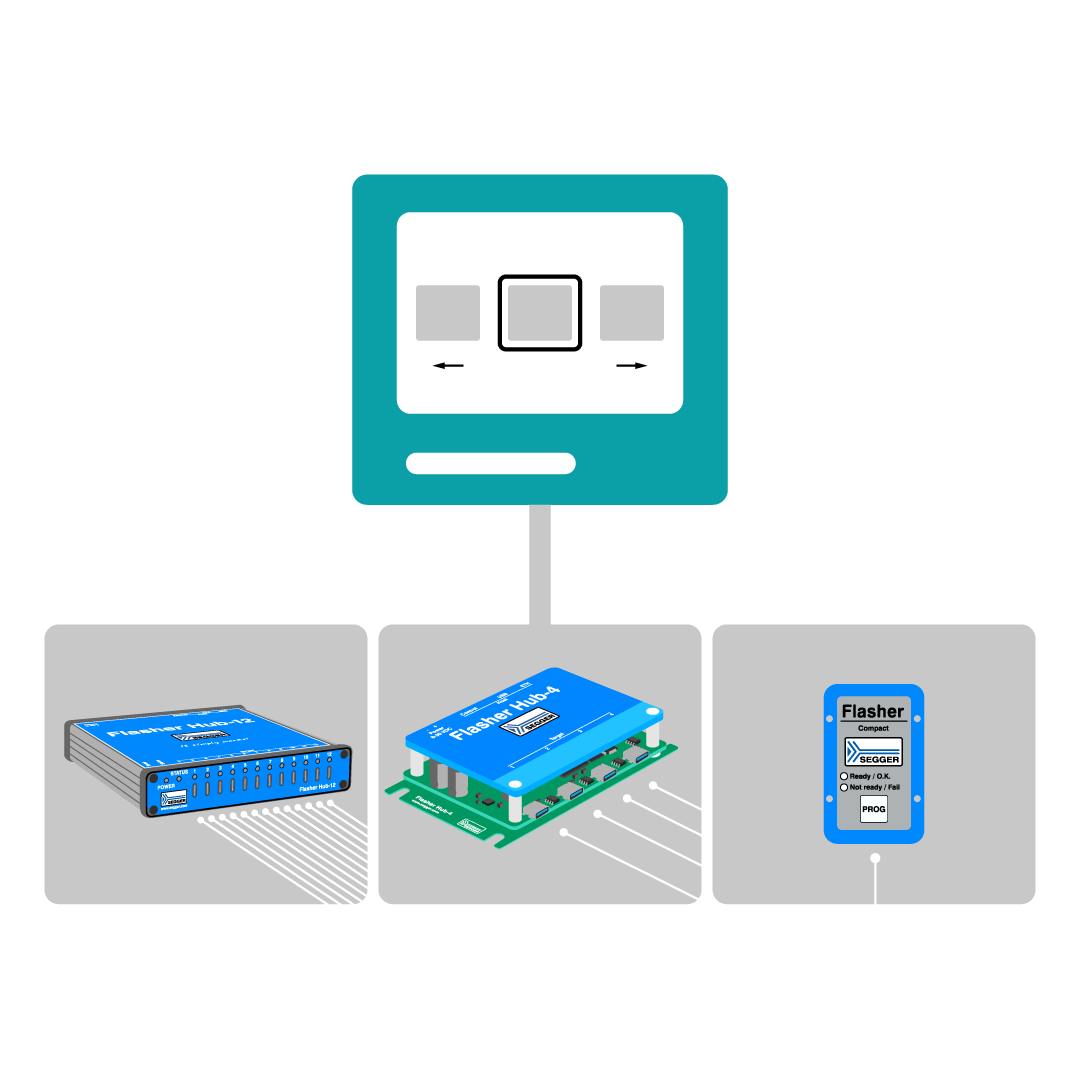
Device control hub
emUSB-Host host can function as a device control hub by working together with other SEGGER products, such as Flasher Hub-4, Flasher Hub-12, and Flasher Compact.

Point-of-sale peripherals
emUSB-Host is used in commercial and retail environments to enable connection to point-of-sale peripherals such as scanners, cash-register drawers, card readers, and more.
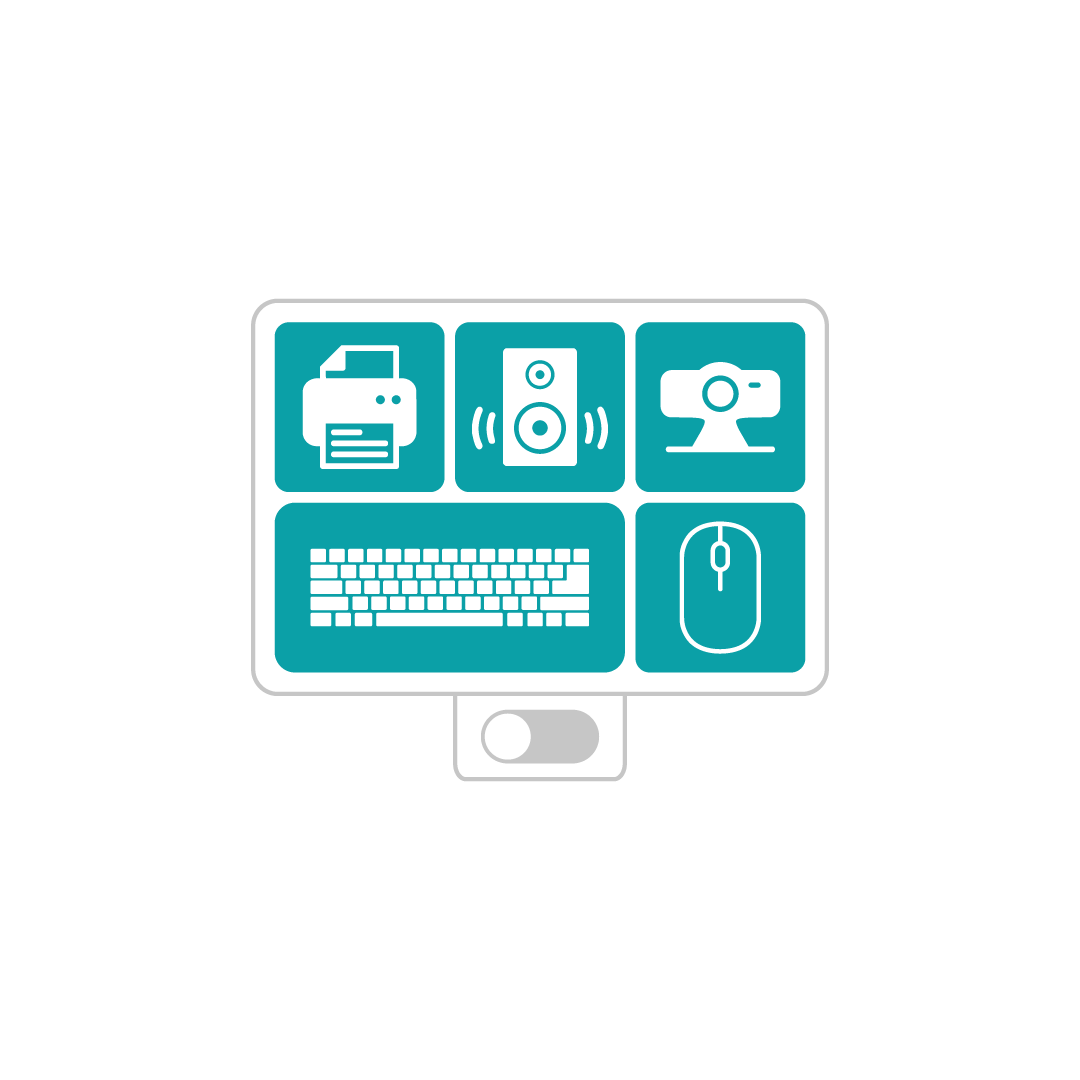
PC and multimedia peripherals
emUSB-Host enables connection with a wide range of PC peripherals, including webcams, mice, keyboards, speakers, printers, modems, docking stations, and more.
Components
SEGGER's USB host stack works on any embedded system with a USB host controller. All transfer modes, commonly used standard device classes, and USB trees with multiple hubs are supported.
emUSB-Host consists of three layers: A driver for hardware access, the core, and at least one USB protocol layer. SEGGER recommends purchasing emUSB-Host as a complete bundle by selecting the emUSB-Host PRO package. This includes support for the most common use cases, such as human interface devices for user interaction, USB sticks for exporting and importing data, printer support, and serial-communication support.
Communication
CDC
These protocols provide access to COM port devices and allow device-to-device communication via USB. They also enable communication for mobile networks such as GSM, 3G, LTE, and cable-based network modems.
LAN
emUSB-Host LAN provides support for a multitude of ethernet-over-USB adapters, which enable network access for any embedded system with a USB host.

Multimedia
Audio
The audio protocol enables communication with any Audio 1.0 device that complies with the USB Device Class Definition for Audio Devices as specified by the USB Implementers Forum.
MIDI
This protocol is for music devices using the MIDI interface via USB. Devices here include MIDI controllers, MIDI sequencers, drum computers, instruments, effect units, samplers, and synthesizers.
Smart card
CCID
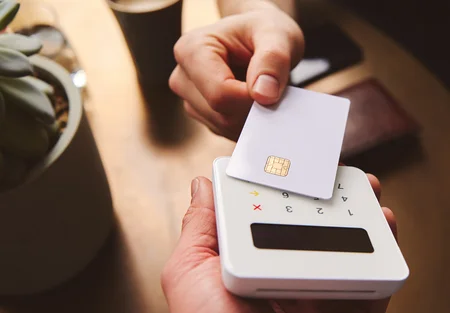
The Chip Card Interface Device protocol allows enumeration and communication with any CCID compatible USB device, such as a smart-card reader.
Vendor
Vendor/custom
The Vendor protocol enables detection and communication with any device, typically those running a custom or proprietary protocol.
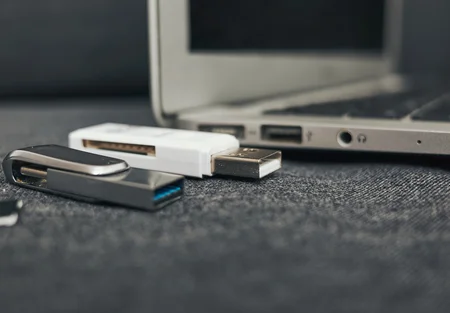
Drivers and supported controllers
emUSB-Host has no hardware dependencies; these are encapsulated through a hardware abstraction layer called a driver.
In order to manage the number of drivers required, emUSB-Host has a flexible driver concept that supports almost all host controllers on the market. A complete list of currently supported drivers is available below. If a controller is not listed, it can be added by contacting SEGGER customer support.
emPower-USB-Host+
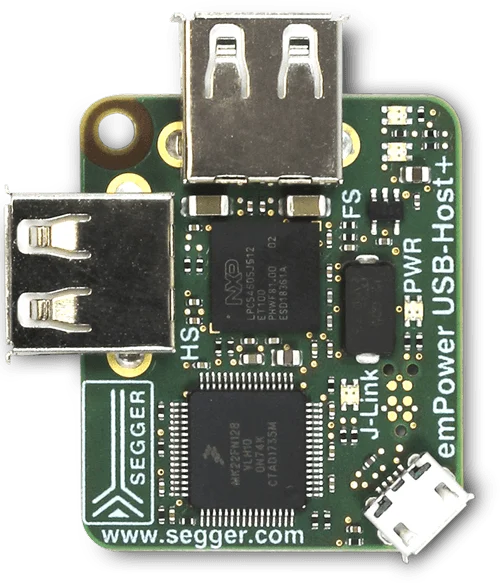
emPower-USB-Host+ is a low-cost board for applications that require two USB-Host ports in a simple and streamlined design. SEGGER software such as emUSB-Host, emLoad, and embOS is ready to run on the board.
The board is accessible via debug probe and use of J-Link OB on the board.
Performance
Performance metrics for read and write speeds, based on system configuration.

Licensing
The software is available under various embedded software license models and can be delivered as source code. All commercial licenses are based on a one-time payment, are royalty-free, and include six months of updates and support from SEGGER’s Embedded Experts.
There are no subscription fees, ensuring predictable and fixed costs over the entire product lifetime.
For non-commercial use, evaluation, and educational purposes, the software is provided under SEGGER’s Friendly License.
FAQ
Why should I use a USB host stack in my embedded system?
There are numerous advantages to adding emUSB-Host to hardware; some of these include:
- Low cost: A USB connector and corresponding components are typically less expensive to purchase than alternative communication interfaces.
- Reliability: The USB protocol ensures data integrity. Errors are detected by the sender, and data can be retransmitted, if needed.
- Versatility: emUSB-Host allows connection with virtually any other technology. Use of a USB-host port network with an Ethernet-over-USB adapter adds connectivity. User-input functionality can be added via connection with an external USB display, keyboard, and mouse. Storage capacity is extendable via MSD stick or hard drive.
- Adaptable speeds: The USB protocol provides multiple speed modes to accommodate an application's needs.
- Expandable: USB hubs can connect multiple devices to a USB host.
- Ease of use: End users need only connect a cable; a USB device is enumerated with no need for user configuration.
Related content
Get in touch with us
Have questions or need assistance? Our Embedded Experts are here to help!
Reach out to us for:
- Licensing quotes
- Technical inquiries
- Project support