J-Link SWO Viewer
View real-time terminal output from targets via SWO
- Monitor target output in real time
- Maintain real-time application behavior
- Use standalone or in parallel with a debugger

Overview
J-Link SWO Viewer displays terminal output from the target via the SWO pin. It can be used stand-alone to monitor log output from a running application or in parallel with a debugger that does not provide terminal output via SWO, such as GDB-based debugging environments.
Licensing
The J-Link SWO Viewer comes as part of the J-Link Software and Documentation Package. The software package is free for any J-Link or J-Trace device and can be downloaded here:
| Supported OS | |
|---|---|
| Windows | Microsoft Windows (x86-64/Arm64) |
| macOS | macOS (x86-64/Apple Silicon) |
| Linux | Linux (x86-64/Arm64) |
Technical background
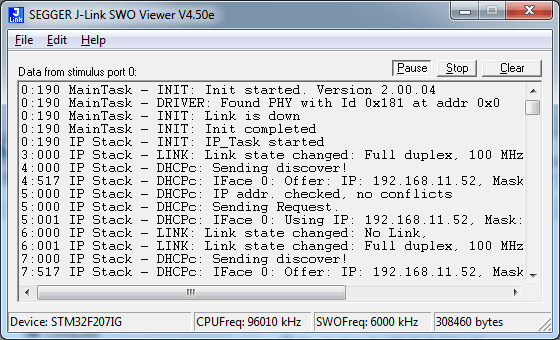
SWO is a dedicated pin of the Arm Cortex-M debug interface. It can be used to output various types of information from the CPU in real time, with terminal I/O being one of its primary use cases.
Due to its low-intrusion nature, applications can generate debug output while maintaining their real-time behavior.
Example code
Simple implementation for output via SWO for Cortex-M processors. It can be used with any IDE. This sample implementation ensures that output via SWO is enabled in order to guarantee that the application does not hang.
/*********************************************************************
*
*       Prototypes (to be placed in a header file such as SWO.h)
*/
void SWO_PrintChar  (char c);
void SWO_PrintString(const char *s);

/*********************************************************************
*
*       Defines for Cortex-M debug unit
*/
#define ITM_STIM_U32 (*(volatile unsigned int*)0xE0000000)    // Stimulus Port Register word acces
#define ITM_STIM_U8  (*(volatile         char*)0xE0000000)    // Stimulus Port Register byte acces
#define ITM_ENA      (*(volatile unsigned int*)0xE0000E00)    // Trace Enable Ports Register
#define ITM_TCR      (*(volatile unsigned int*)0xE0000E80)    // Trace control register

/*********************************************************************
*
*       SWO_PrintChar()
*
* Function description
*   Checks if SWO is set up. If it is not, return,
*    to avoid program hangs if no debugger is connected.
*   If it is set up, print a character to the ITM_STIM register
*    in order to provide data for SWO.
* Parameters
*   c:    The Chacracter to be printed.
* Notes
*   Additional checks for device specific registers can be added.
*/
void SWO_PrintChar(char c) {
  //
  // Check if ITM_TCR.ITMENA is set
  //
  if ((ITM_TCR & 1) == 0) {
    return;
  }
  //
  // Check if stimulus port is enabled
  //
  if ((ITM_ENA & 1) == 0) {
    return;
  }
  //
  // Wait until STIMx is ready,
  // then send data
  //
  while ((ITM_STIM_U8 & 1) == 0);
  ITM_STIM_U8 = c;
}

/*********************************************************************
*
*       SWO_PrintString()
*
* Function description
*   Print a string via SWO.
*
*/
void SWO_PrintString(const char *s) {
  //
  // Print out character per character
  //
  while (*s) {
    SWO_PrintChar(*s++);
  }
}