Reliability in health technology – Beurer relies on SEGGER for dependable development and production tools
Published: March 18th, 2026
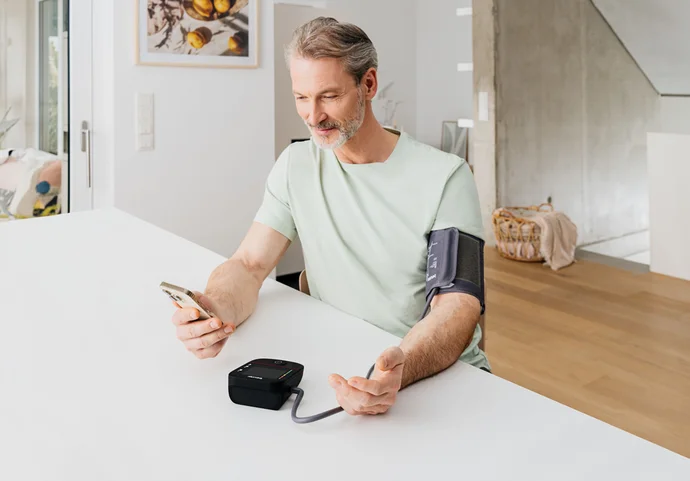
In health technology, precision and reliability are essential. A stable signal, a reliable reading, a seamless interaction between hardware and firmware: these details define the quality of a device long before it reaches the customer. Beurer, a family-owned company based in Ulm, Germany, specializing in health, fitness, and well-being products, builds its reputation on this level of dependability.
As the company expanded its product range and adapted to changing global supply chains, managing a variety of microcontrollers while keeping production stable became increasingly challenging. To maintain consistent quality across different hardware platforms and global manufacturing sites, Beurer sought a unified approach to development and production programming.
The challenge: many microcontrollers, one solution
To support smooth and scalable production, Beurer works with a broad range of microcontroller technologies. While this allows great flexibility in product development, it also increases the variety of tools and workflows used across different device families. Coordinating multiple programming approaches can make it challenging to maintain consistent processes and uniform standards at all production sites. For a company whose reputation depends on reliability, establishing a streamlined and predictable setup is essential.
The goal was clear: find one solution that could unify programming and development across all microcontroller types, simplify production, and ensure dependable results at every site.
The solution: SEGGER tools supporting both development and production
Some of Beurer’s engineers were already familiar with SEGGER technology. One of them had used a J-Link during university projects and remembered it as a robust and efficient probe for embedded development. Drawing on this experience, Beurer introduced J-Link into its firmware development process four years ago. Later, the company extended its use of SEGGER products by implementing Flasher Compact for programming in production.
J-Link – a strong foundation for embedded development
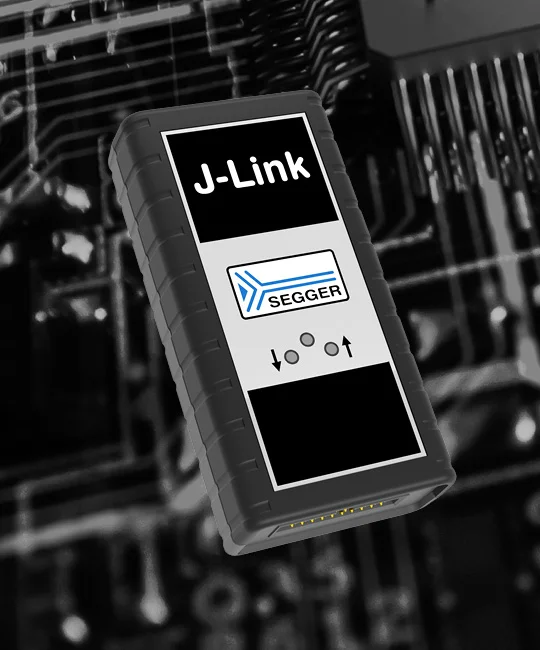
J-Link connects the development PC to the target hardware, providing a fast, stable, and reliable interface for programming and debugging. It supports all major CPU architectures and works seamlessly with leading development environments such as Embedded Studio, Eclipse, and Keil MDK. As one of the most widely used debug probes in the industry, it offers a dependable platform for developing complex embedded systems.
With J-Link, Beurer’s engineers can debug and test firmware efficiently, using features such as real-time memory inspection and single-stepping through code. SEGGER’s high-speed communication protocol ensures short download times and low latency, allowing faster testing and iteration. Because it supports a wide range of microcontrollers out of the box, the J-Link allows developers to move easily between different hardware platforms while maintaining the same workflow.
Flasher Compact – reliable programming in every production environment
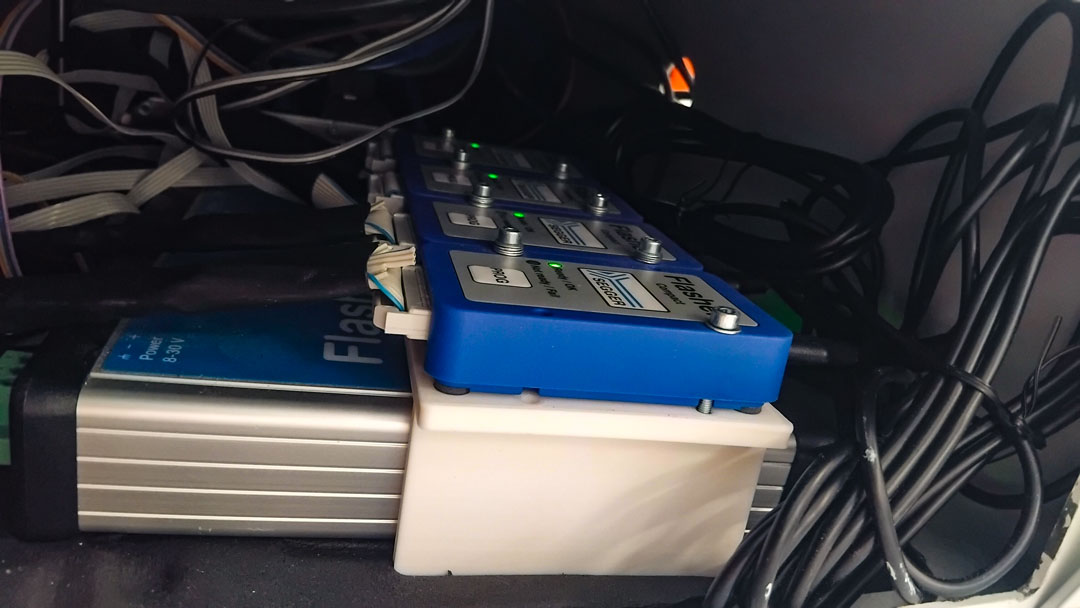
For production, Beurer selected the Flasher Compact to standardize programming across its manufacturing facilities. Compact and built for industrial use, the device integrates easily into automated calibration and test systems. Once a programming image is stored on the Flasher Compact, it can program target devices independently via standard interfaces such as JTAG, SWD, or UART.
The Flasher Compact’s solid design and proven technology guarantee fast, repeatable programming for every unit, ensuring that devices are programmed consistently across large production batches. In combination with the Flasher Hub-12, it is the ideal solution for gang programming.
At Beurer, it is used in automated production lines worldwide. Integrated into Beurer’s in-house PC-based software for programming and calibration, it has become a key part of the company’s global production infrastructure.
SEGGER’s software utilities and APIs make it possible to control and monitor Flashers directly from Beurer’s own systems, ensuring smooth automation and complete process traceability.
Implementation and support
Integrating SEGGER tools into Beurer’s workflow was straightforward. The setup of both J-Link and Flasher Compact required only minimal configuration. One complex microcontroller family required custom integration, which SEGGER’s engineers provided quickly and reliably. All other integrations and updates were handled free of charge and without delay.
For Beurer’s engineers, the clarity and completeness of SEGGER’s documentation made it easy to get started and work independently. When support was needed, SEGGER’s technical team responded promptly and resolved issues within a few days. This responsiveness helped ensure that development and production could continue without interruption.
The result: stability, flexibility, and peace of mind
By standardizing on SEGGER tools, Beurer has strengthened both its development and production processes. Programming has become stable and predictable, independent of the microcontroller in use. Future component changes can now be implemented quickly, and firmware updates or calibration steps can be carried out with consistent results at every site.
The combination of reliable hardware, well-structured software, and responsive support has made SEGGER a trusted partner in Beurer’s ongoing commitment to quality and innovation.