Software structure
emFile is organized in separate layers for maximum configuration flexibility. The layers have clear and simple interfaces that allow easy extending of the file system functionality.
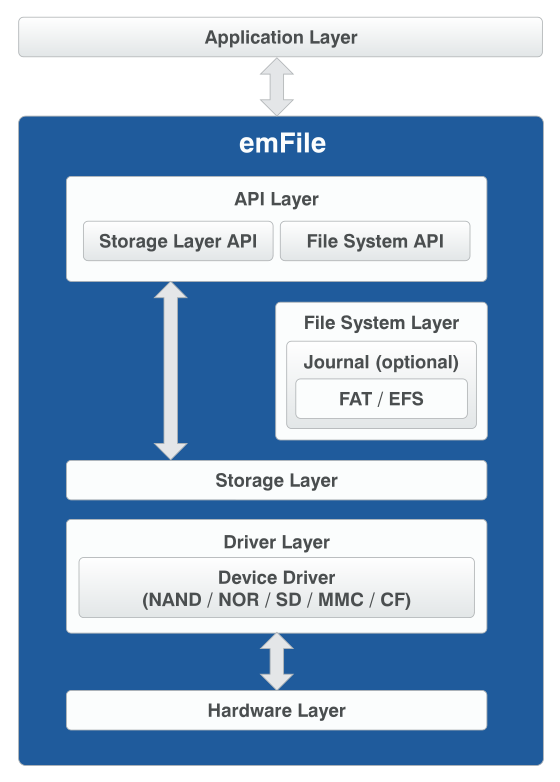
How emFile is organized
API Layer
The API Layer is the interface between emFile and the user application. It is subdivided in two parts, Storage API and File System API. The File System API contains file functions in ANSI C stdio style, such as FS_FOpen(), FS_FWrite() etc. The API Layer transfers these calls to the File System Layer. Currently the FAT file system or an optional file system, called EFS, are available for emFile. Right now they cannot be used simultaneously. The Storage API contains the functions which are required to initialize and access a storage medium. The Storage API allows sector read and write operations. The API Layer transfers these calls to the Storage Layer. The Storage API is optimized for applications which do not require file system functionality like file and directory handling. A typical application which uses the Storage API could be a USB mass storage device, where data has to be stored on a medium, but all file system functionality is handled by the host PC.
File System Layer
The file system layer translates file operations to logical block (sector) operations. After such a translation, the file system calls the logical block layer and specifies the corresponding device driver for a device.
Storage Layer
The main purpose of the Storage Layer is to synchronize accesses to a device driver. It furthermore provides a simple interface for the File System API. The Storage Layer calls a device driver to perform a block operation. It also contains the cache mechanism.
Device Layer
Device drivers are low-level routines that are used to access sectors of the device and to check status. It is hardware independent but depends on the storage medium. A device driver consists of basic I/O functions for accessing the hardware and a global table that holds pointers to these functions.
Hardware Layer
These are the low level routines to access your hardware. These routines simply read and store fixed length sectors. The structure of the device driver is simple in order to allow easy integration of your own hardware.